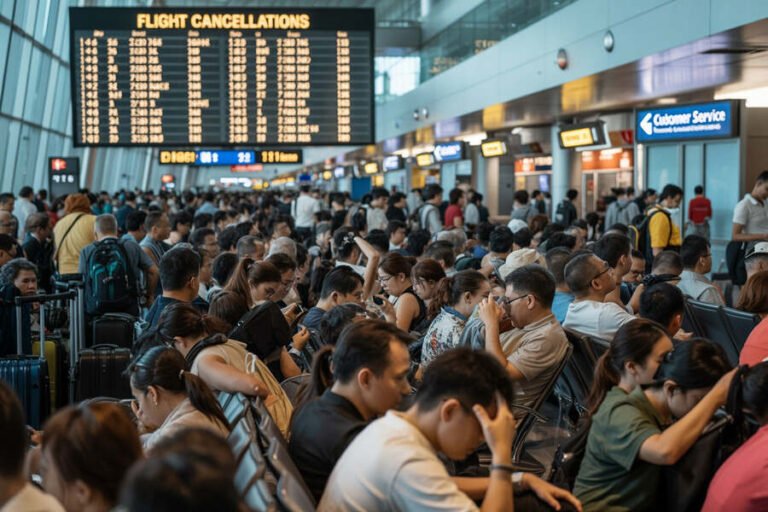
Thailand Imposes Strict Overstay Rules With 500 Baht Fine Waivers For Stranded Travelers Amid Ongoing West Asia Crisis
Saudi Arabia joins Turkey, United Arab Emirates, Iran, Bahrain, Kuwait, Qatar, and several other Middle Eastern countries in coping with severe airspace closures and flight disruptions as tensions escalate in the region, causing widespread
travel chaos. In response to these disruptions, Thailand has stepped in with exceptional measures to assist stranded travelers, imposing strict overstay rules with 500 Baht waivers for foreign nationals affected by the ongoing crisis.
These efforts come as many trarvelers find themselves unable to depart due to canceled or rerouted flights, with Thailand’s government offering temporary visa extensions, financial assistance, and support from local businesses to mitigate the impact.
As escalating tensions in the Middle East continue to impact the region, air travel has been severely disrupted, with numerous countries, including Saudi Arabia, Turkey, the United Arab Emirates (UAE), Iran, Bahrain, Kuwait, and Qatar, all grappling with airspace closures and flight cancellations. This mass disruption of airspace is triggering widespread delays and cancellations across international flights, creating ripple effects on global travel.

Travelers are facing significant challenges, with many stranded in countries like Thailand, where tourism and immigration authorities have stepped in to offer temporary relief measures.
Thailand, a global tourism hub, has responded to the crisis by imposing special overstay waivers and offering assistance to travelers stranded in the country due to the ongoing Middle East conflict. These temporary immigration and tourism policies reflect the growing concern over the plight of foreign nationals who are unable to return home because of the regional aviation shutdown.
The Impact of the Middle Eastern Airspace Closures
Middle East Airspace Shut Down: A Major Aviation Crisis
The Middle Eastern airspace has been under significant strain as several key regional countries have closed their airspace or severely restricted international flights. This includes the major airspace hubs of Iran, Iraq, Israel, Qatar, and the UAE. The Saudi Arabian and Turkish airspaces have also been impacted, with airlines rerouting flights or canceling them altogether.
These closures have disrupted the standard flight routes between Europe, Asia, and Africa, causing a domino domino effect that has forced international flights to divert, delay, or cancel. The ongoing airspace shutdown has primarily impacted airlines that transit through the Middle East, with Qatar Airways, Emirates, Etihad Airways, and other carriers having to deal with massive disruptions to their operations. The closures have not only affected flights directly flying to these countries but have also altered connections for flights coming to Southeast Asia, Europe, and beyond.
Saudi Arabia Joins the List of Countries Facing Disruptions
As the region faces a prolonged crisis, Saudi Arabia has become one of the key players in the Middle Eastern aviation crisis. Major Saudi airports, such as King Khalid International Airport in Riyadh and King Abdulaziz International Airport in Jeddah, have faced operational delays and cancellations due to the conflict and airspace issues.
While Saudi Arabia has not fully closed its airspace like Iran or Iraq, there have been considerable impacts on flights departing from and arriving in the kingdom. International airlines have rerouted flights, and Saudi Arabian Airlines (Saudia) has been forced to cancel a number of services, mainly those connecting to Europe and Asia. The disruptions are compounded by Qatar Airways and other regional carriers suspending flights through Saudi airspace, further exacerbating the challenges travelers face.
As a result, thousands of passengers have found themselves stranded in Saudi Arabia, as airlines halt flights to and from the country. This has led to a ripple effect across the broader Gulf Cooperation Council (GCC) region, where Bahrain, Kuwait, Qatar, and UAE also face significant flight disruptions.
Thailand Steps In: A Lifeline for Stranded Travelers
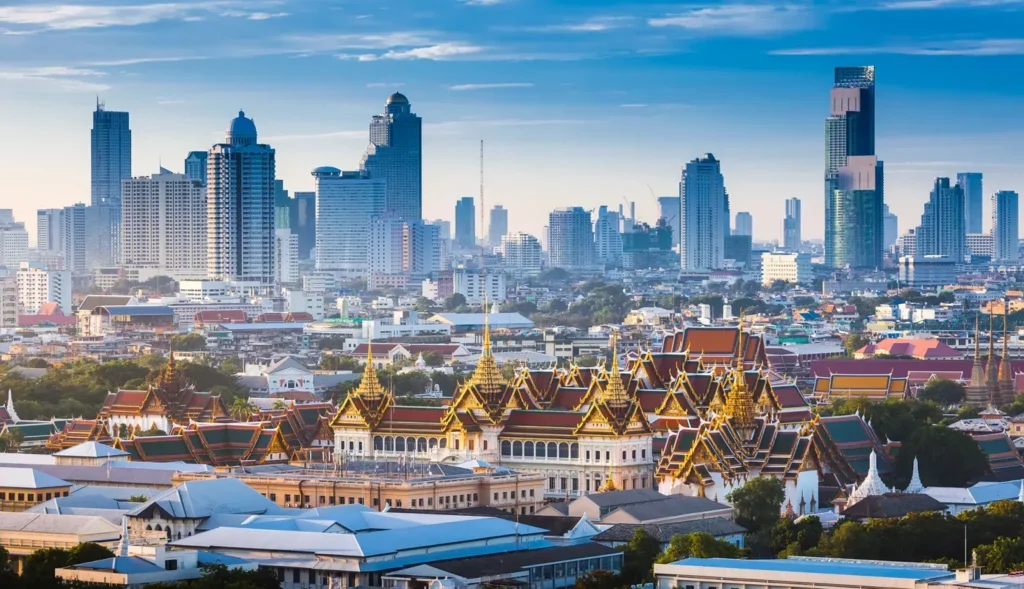
In the face of widespread flight disruptions and the inability of foreign travelers to return to their home countries, Thailand has taken decisive action to support tourists who are stranded in the country due to airspace restrictions. The country’s immigration authorities have announced that foreign nationals whose visas or permission to stay have expired on or after February 28, 2026, will not face penalties when they depart the country. This policy comes as a major relief for tourists who would otherwise face hefty overstay fines of 500 Baht per day, which can accumulate to 20,000 Baht for those who overstay for an extended period.
This new policy ensures that tourists who cannot leave due to the Middle Eastern airspace crisis are not penalized for circumstances beyond their control. Instead of the usual overstay fines, Thailand is offering a waiver for those affected, which is a crucial move considering the mounting challenges faced by travelers worldwide due to air travel disruptions.
Temporary Stay Extensions: A Lifeline for Long-Term Stranded Tourists
For travelers who cannot immediately find a flight to return home, Thailand is offering a temporary stay extension of up to 30 days. This option is available to foreign nationals whose permission to stay has already expired. However, this extension comes with certain conditions:
Overstay fine payment: If a traveler’s visa has expired, they will need to first pay the legally required overstay fine before applying for the extension.
Supporting documents: Travelers must submit the required TM.7 application form along with their passport copy and other documents. These documents include a letter from their embassy or consulate explaining the need for an extension. If such a letter is not available, travelers will need to provide an official statement from the immigration officer.
Temporary stay: Once the necessary documents are submitted and the overstay fine is paid, travelers can apply for the extension, which could allow them to stay for up to 30 additional days in Thailand.
This measure provides some relief for foreign tourists whose travel plans have been indefinitely delayed, ensuring they can remain legally in the country until they are able to depart.
Financial Assistance: Thailand’s Commitment to Stranded Tourists
In addition to offering leniency on immigration matters, Thailand’s Ministry of Tourism and Sports is considering a financial assistance program for stranded foreign nationals. The ministry has announced plans to create a fund that will help cover the costs of accommodation and meals for affected tourists.
The financial aid would be distributed not directly to travelers but to local tourism operators and hotels that are housing stranded visitors.
The fund could provide up to 2,000 Baht per day for each affected tourist, with a maximum of 20,000 Baht per person. This assistance is designed to ease the burden on tourists who are facing financial strain due to extended stays caused by the ongoing crisis. It will also support the hospitality industry, which has been struggling with the sudden influx of visitors who are unable to depart due to the flight disruptions.
Local Initiatives: The Role of Thailand’s Tourism Sector
To further assist tourists, several local initiatives have been launched across Thailand’s major tourist destinations, including Phuket, Bangkok, Chiang Mai, and Krabi. The provincial governors, working in conjunction with tourism and hospitality industry associations, have encouraged businesses to support affected tourists by:
- Providing updated information on available travel options, helping tourists find alternative routes or travel arrangements to leave the country.
- Waiving reservation change fees for tourists who need to adjust their travel plans due to delayed or canceled flights.
- Offering preferential rates for extended stays at hotels and resorts, ensuring that tourists are not financially penalized for staying longer than anticipated.
- Waiving cancellation fees where necessary, recognizing that tourists may have no control over the situation.
These initiatives are an example of how the local tourism sector is rallying to support stranded tourists, offering practical assistance and financial relief during an unprecedented global travel crisis.
The Growing Global Trend: Other Countries Join Thailand’s Response
Thailand is not the only country to adopt special measures for stranded travelers due to the Middle East airspace crisis. Several other countries, including Sri Lanka, India, Indonesia, the Maldives, and Qatar, have temporarily adjusted their immigration and tourism policies to help foreign nationals who are stuck in the region due to flight disruptions.
These adjustments often include overstay waivers, visa extensions, and temporary shelter and financial assistance for affected travelers. Countries in the region have recognized the importance of supporting foreign nationals who are in their countries through no fault of their own, and the coordinated response underscores the global solidarity among tourism authorities and governments.
The ongoing air travel crisis caused by the escalation of tensions in the Middle East has had a significant impact on global air travel, with several countries, including Saudi Arabia, Turkey, UAE, Iran, Bahrain, Kuwait, and Qatar, grappling with airspace disruptions and flight cancellations. Thailand, with its tourism-dependent economy, has implemented a series of temporary measures to assist stranded travelers, offering them waivers of overstay fines and temporary stay extensions. Additionally, the Ministry of Tourism and Sports has prepared to activate financial aid for those affected, demonstrating a proactive approach to a global crisis.
Saudi Arabia joins Turkey, UAE, Iran, Bahrain, Kuwait, Qatar, and several other Middle Eastern countries in coping with airspace closures and flight disruptions due to escalating tensions in the region. As a result, Thailand has imposed strict overstay rules with 500 Baht waivers for stranded travelers.
As the situation continues to evolve, it is crucial for travelers to stay updated on the latest developments and be prepared for potential delays or cancellations. Thailand’s response has been an example of how countries can balance the need for immigration enforcement with humanitarian aid during times of international uncertainty. As tensions in the Middle East persist, travelers should expect continued disruptions in their plans but can take comfort in the measures that countries like Thailand are putting in place to help those stranded in foreign lands.
Credit: TTW