

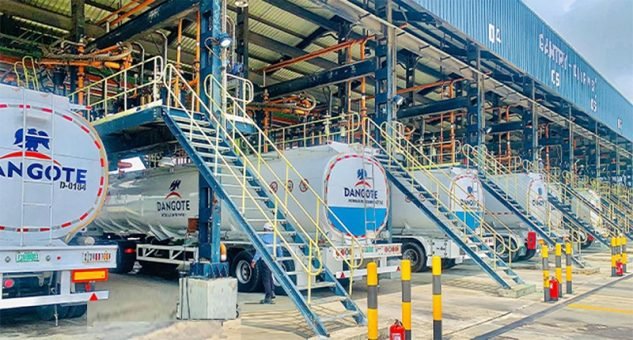
Dangote Refinery commences PMS shipment to West African Markets
Dangote Petroleum Refinery exported at least 208,000 metric tons of premium motor spirit in five cargoes between Oct. 30 and Nov. 6, with most of the fuel bound for West African buyers, according to vessel movement records reviewed by Petroleumprice.ng.
The shipments show the refinery selling petrol across the region, adding to Nigeria’s push to become a supplier of refined fuel rather than a buyer of it.
Five vessels carried the cargoes: UM Balwa, NCC Qamar, Precious Balboa, UM Kiso and Fair Wonder. Each took between 40,000 and 44,000 tons.
The heaviest loading came on Oct. 30, when three vessels left with a combined 128,000 tons of petrol. UM Balwa and Precious Balboa each carried 44,000 tons to West Africa. NCC Qamar took the remaining 40,000 tons.
The records list NCC Qamar’s cargo as “export without a specific receiving country or port.” That leaves its final destination unclear. The other four cargoes, totalling 168,000 tons, were explicitly assigned to West African markets.
Another 40,000-ton cargo followed on Nov. 3 aboard UM Kiso, which was bound for Tema, Ghana. The same vessel and volume appear again in the Nov. 4 records. Petroleumprice.ng treated that entry as “a repeated record of the shipment rather than a separate export,” so it is counted once in the 208,000-ton total
The latest cargo in the period was recorded on Nov. 6, when Fair Wonder carried 40,000 tons to West Africa.
The refinery also kept exporting other refined products during the period, including aviation fuel and automotive gas oil, or diesel. Those shipments are not included in the petrol total.
Petrol exports matter because the fuel has long been at the center of Nigeria’s supply problems. For years the country relied heavily on imported cargoes to meet domestic demand. Sending petrol abroad in repeated, large-volume lots marks a shift in how Nigerian-refined fuel is being used.
The records don’t say how the volumes compare with domestic sales or with the refinery’s total output over the period. They also don’t name buyers, give prices or describe the contract terms behind the cargoes. Without that information, it is hard to judge whether the exports reflect a steady commercial strategy or one-off sales of surplus fuel.

Ghana’s Tema port is the only specific destination named in the records. Tema is one of West Africa’s main fuel-receiving terminals. The other cargoes are listed only as headed to the broader region.
Analysts who track the market will likely watch whether such shipments continue at a similar pace in the coming weeks. A steady flow would suggest the refinery is building lasting commercial links with neighbouring importers. A drop-off might point to supply being pulled back to the home market, or to shipping and scheduling constraints.
The petrol shipments “underscore the refinery’s participation in regional petroleum product trade,” the report said, noting that West Africa remained a clearly identified destination for a significant share of cargoes.
For Nigerian fuel consumers, the question is whether exports leave enough product at home. For buyers elsewhere in West Africa, the cargoes offer a nearby alternative to supplies that previously came from farther afield. Both questions will become clearer as more shipping data arrives.
Credit: Business Day