The Independent National Electoral Commission (INEC) wednesday described the non-recognition of the smart card reader by the 1999 Constitution(as amended), as a great setback for the commission’s efforts to tackle poll fraud, using technology.
According to the commission, the lack of legal backing for the smart card reader has rendered the device legally impotent and has further encouraged politicians not to accord any importance to it.
This came just as the civil society Situation Room has accused the electoral body of not being firm in enforcing rules.
The civil society coalition also said INEC should take responsibility for most of the lapses witnessed during elections, especially as it concerns violence and thuggery.
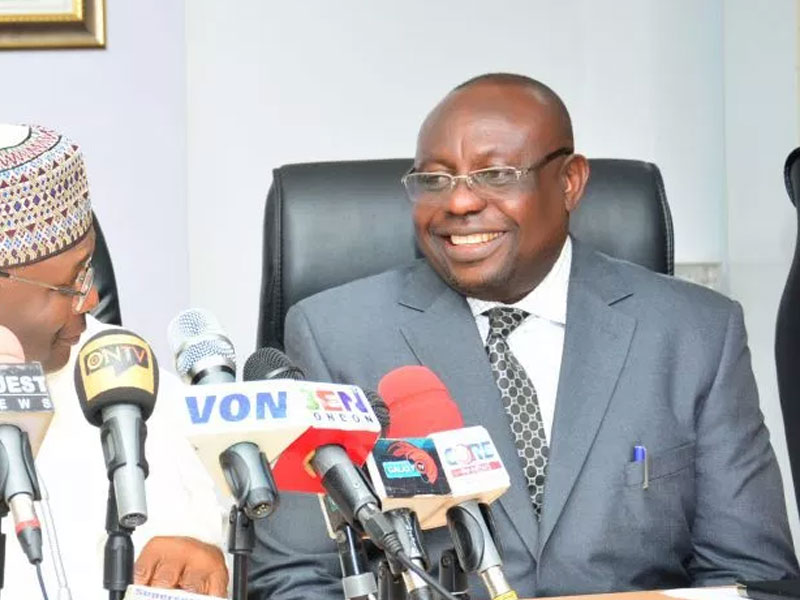
INEC Commissioner in charge of Publicity and Voter Education, Mr. Festus Okoye, at a meeting to review the just-concluded governorship elections in Kogi and Bayelsa states, said since the record of the card reader did not count as evidence during election cases, most politicians decided to ignore it while perpetrating rigging.
“We must find solution to the issue of the smart card reader. The smart card reader has lost its efficacy and vibrancy in relation to the electoral process because the political elite have found a way around it. So, rather than use the smart card reader, they just ignore it because ultimately they know that when they go to the court what it will be saying is that if you want to prove over voting, we want to see INEC register or result sheet and not the smart card reader. So, as far I am concerned, the smart card reader has become a redundant instrument and inconsequential,” he stated.
On complaints trailing the just-concluded governorship elections, Okoye said INEC acknowledged that there was violence during the elections in Kogi and Bayelsa states, which led to the decision of almost half of its ad hoc staff to withdraw from the process for fear that their safety might not be guaranteed.
Okoye, however, added that the commission does not have the constitutional powers to annul an election that was concluded and the results announced.
He said: “My own understanding of the rules of interpretation is that when the intention of the legislation is very clear, to give a particular legislation its ordinary meaning, you don’t have to give any other meaning to the provisions of the law”.
According to him, Section 26 of the Electoral Act only gave INEC powers to postpone an election before its commencement, adding that there is nowhere it empowers the commission to cancel an election that has been held.
“The law states clearly that the moment the election is declared at the polling unit by a presiding officer, the chairman of INEC does not have the powers to cancel the results of the election from that polling unit. In other words, each polling unit is sovereign in its own right,” he added.
He gave instances where INEC had tried to withhold certificates of return for senatorial and House of Representatives elections on grounds that the returning officers made their pronouncement under duress, but the candidates went to court and got the commission’s decision reversed.
He said the courts had always tied the hands of INEC in such circumstances.
Okoye also cited the court judgment nullifying INEC’s disqualification of some candidates because of being underage or they did not have proper identity as another instance where the judiciary has constrained INEC’s regulatory powers.
“My understanding of the whole issue of electoral reform is that electoral system alone cannot solve the problem of elections in the country without our political elite,” he stated.
On violence and thuggery, Okoye said although the law conferred on INEC the sole responsibility of conducting elections, the aspect of providing security was outside its powers.
“The law never asked INEC to go and catch thugs, it is the responsibility of the security agents,” he said.
Earlier, the Convener of the Civil Society Situation Room, Mr. Clement Nwankwo had expressed the view that INEC should be more firm and decisive in dealing with infractions of the electoral laws.
He added that the commission cannot exonerate itself from the irregularities that marred the last governorship elections in Kogi and Bayelsa states.
Also the Political Counsellor at the British High Commission in Abuja, Mr. Dominic Williams, said Britain was worried about the increasing culture of violence and thuggery in Nigeria’s elections.
He underscored the need for government to work towards ensuring peaceful election.